
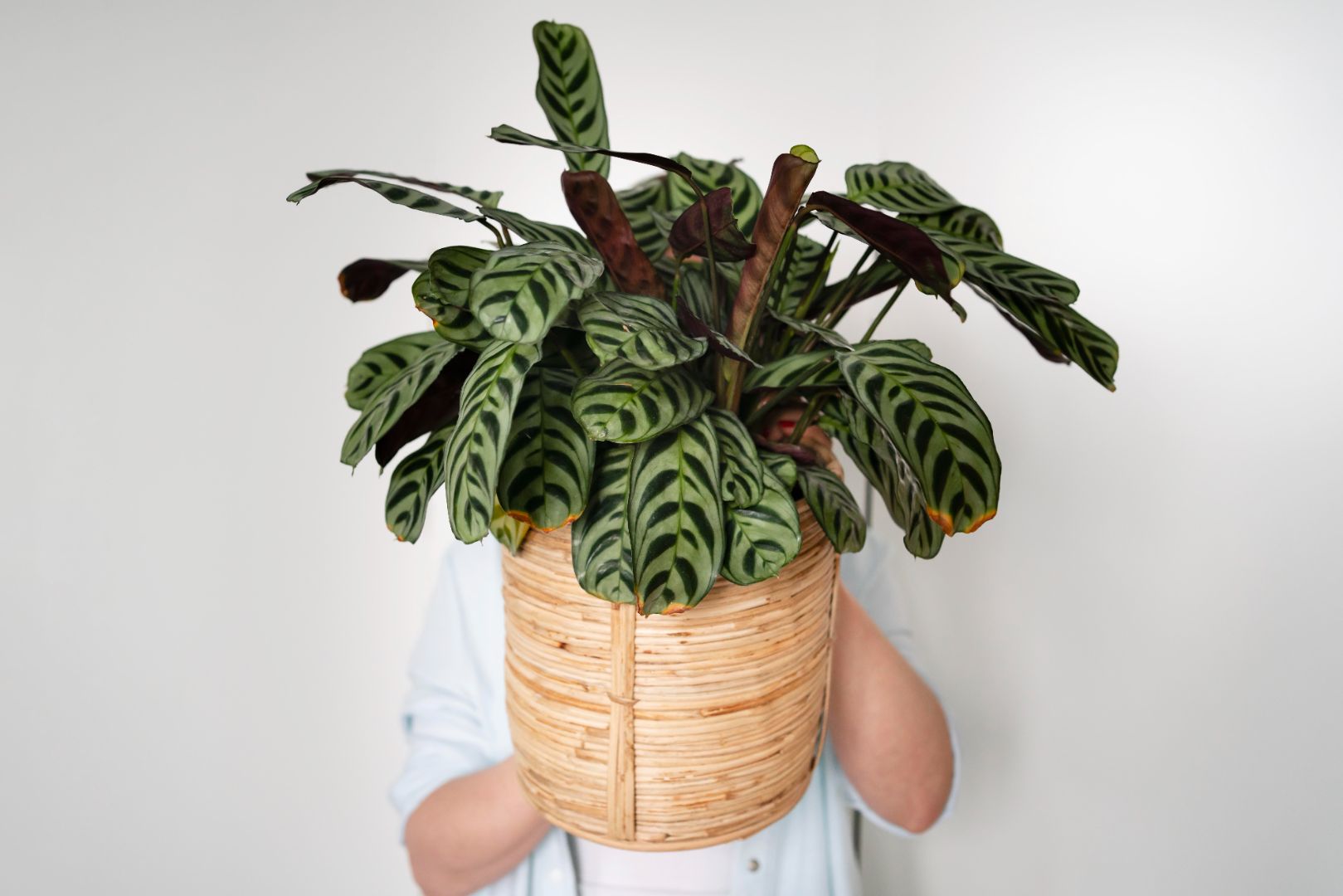
Calathea location
The right location for your Calathea determines success or failure in care. In their South American homeland, various Calathea species grow in the shade of large trees. A bright location without direct sun is ideal – east or west-facing windows are perfect. Humidity should be at least 50 percent, preferably 60 to 70 percent. The temperature should be between 18 and 25 degrees year-round. Drafts and cold floors significantly harm the plant.
Light requirements and sunlight exposure
Direct midday sun burns the sensitive leaves within a few hours. A distance of one to two meters from the window is optimal. For north-facing windows, the Calathea can stand directly at the window. Locations that are too dark cause the leaf patterns to fade and growth to stagnate. Artificial plant lamps can help in unfavorable lighting conditions.
Optimal room temperature and humidity
Calathea prefers constant temperatures without strong fluctuations. Temperatures below 16 degrees stress the plant. Never place it directly next to heaters or air conditioners. Humidity can be increased by regular misting, water bowls with gravel, or humidifiers. Misting the leaves should be done in the morning so the leaves dry by evening. Use only demineralized water.
Avoid changing location
Calathea is sensitive to changes in location. Find a permanent spot and avoid frequent moving. In summer, the plant can be placed outdoors in protected locations, but only if nighttime temperatures are above 18 degrees. Bring the plant indoors in time before cool nights.
Repotting Calathea
Calathea should be repotted every two to three years in spring. Choose a pot that is two to three centimeters larger. A drainage hole is mandatory. The soil must be loose, permeable, and slightly acidic with a pH between 5.5 and 6.5. You can mix commercial indoor plant soil with coconut fibers and perlite. The right Calathea soil is structurally stable, rich in organic matter, and has good drainage.
Choosing the right substrate
A mixture of indoor plant soil, coconut fibers, perlite, and orchid bark in a ratio of 4:2:1:1 has proven effective. Pure potting soil is often too dense. Avoid lime-containing substrates. Ready-made mixes for rhododendrons are also suitable. A drainage layer of expanded clay at the pot bottom prevents waterlogging.
Repotting Calathea - step by step
Water the Calathea a day before. Gently remove the plant from the pot and check the roots for rot. Remove damaged root parts. Loosen the root ball slightly. Place the plant in the new pot and fill with fresh soil. Water moderately after repotting. Pause fertilization for 6-8 weeks.
Avoid common mistakes
A common care mistake with Calathea is repotting into pots that are too large. Too much soil retains excess moisture. Always use sharp, disinfected tools. After repotting, the plant needs time to adjust. Reduce fertilization and observe the plant. Slight wilting is normal and will subside after a few days.
Watering Calathea: How often and how much
How often you need to water your Calathea depends on temperature, humidity, and pot size. The plant requires consistently slightly moist substrate. In summer, watering every two to three days may be necessary; in winter, once a week is often sufficient. Check the top two centimeters: if they are dry, it's time to water. Water thoroughly until water runs out of the drainage hole. Remove excess water after 15 minutes.
Pay attention to water quality
Hard tap water is poison for Calathea. Use only soft water. Rainwater is ideal; filtered or boiled tap water also works. The water temperature should be room temperature. Lime deposits on the soil indicate water that is too hard.
Watering technique and avoiding waterlogging
Water directly onto the soil, not over the leaves. Distribute the water evenly. Waterlogging is one of the most common care mistakes with Calathea and leads to root rot. A pot with a drainage hole and drainage layer prevents waterlogging. In winter, the plant needs significantly less water. If waterlogging occurs, repot immediately into fresh substrate.
Optimize watering
How often you need to water your Calathea can be determined by observation: drooping leaves signal water deficiency, yellowish leaves indicate waterlogging. Regularity is more important than quantity. Consistent moisture avoids stress and prevents problems.

Fertilizing Calathea for vigorous growth
Proper fertilization supports healthy growth of your Calathea. From March to September, apply liquid green plant fertilizer at half concentration every two to three weeks. Over-fertilization harms and leads to salt accumulation. Stop fertilizing completely in winter. After repotting, pause for six to eight weeks – fresh substrate contains sufficient nutrients.
The right fertilizer
Green plant fertilizer with a slightly increased nitrogen content is best suited. Liquid fertilizers are easy to dose. Never use more than half the recommended concentration. It is better to fertilize more often in smaller doses.
Avoid fertilization mistakes
Too much fertilizer causes brown leaf tips. White crusts on the soil indicate salt deposits. Rinse the substrate with soft water. Never fertilize dry soil. Water first with clear water, then with fertilizer solution.
Organic alternatives
Coffee grounds, compost tea, or worm compost provide natural nutrients. Coffee grounds slightly lower the pH value. Organic fertilization is gentler because nutrients become available more slowly. The risk of over-fertilization decreases.
Cutting Calathea: When and How
Pruning the Calathea is limited to removing damaged leaves. Shaping cuts are not necessary. You can cut off brown leaf tips without cutting into the green tissue. Remove completely brown leaves at the base. Always use clean, disinfected tools.
Remove damaged leaves
Leaves with brown spots, cracks, or pest infestations should be removed promptly. They drain energy and are sources of infection. Dispose of cut parts in the household waste. Disinfect tools with alcohol after each cut.
Proper Cutting Technique
Hold the scissors slightly angled. Cut slightly into healthy tissue. For extensive damage, remove the entire leaf. Too many damaged leaves indicate care errors – usually too dry air or hard water.
Care After Pruning
After cutting, slightly reduce watering. New leaves usually sprout within a few weeks. Support growth with optimal conditions. Remove no more than one third of the leaf mass at once.
Propagating Calathea by Division
Calathea propagation is done by dividing the rootstock when repotting. Success chances are highest in spring. Larger specimens form several growth points with their own root systems. These can be carefully separated. Each section should have at least three leaves and sufficient roots.
Division Step by Step
Water the mother plant a day before. Locate natural separation points. Cut the rhizome with a sharp knife. Dust cut surfaces with cinnamon powder. Plant each section in its own pot with fresh substrate. Significantly increase humidity.
Care of Young Plants
Freshly divided Calathea are sensitive. Keep humidity consistently high, at least 70 percent. Spray several times daily. Maintain temperature constantly between 22 and 25 degrees. Fertilize only after eight weeks. After three to four months, the young plants are established.
Alternative: Seed Propagation
Growing Calathea from seed is laborious and lengthy. Seeds are rarely available and germinate poorly. Seedlings grow extremely slowly. Division is significantly faster and more successful.

Diseases and Pests in Calathea
Diseases in Calathea usually occur due to care errors. Waterlogging leads to root rot. Affected parts become soft and brown. Remove all damaged parts and repot in fresh substrate. Fungal diseases show brown spots with yellow halos. Remove infected leaves and improve ventilation.
Recognizing Common Pests
Spider mites infest Calathea in dry air. Fine webs and light speckles are signs. Increase humidity and spray the plant. Thrips cause silvery spots. Scale insects and mealybugs cling firmly to leaves. Remove pests with a cotton swab soaked in alcohol.
Preventive Measures
Healthy, well-maintained Calathea are more resilient. Optimal location conditions strengthen the plant. Quarantine for new arrivals prevents introduction. Regularly check for infestations. Remove fallen leaves from the pot.
Treatment
Start with mechanical measures. Rinsing removes many pests. Soap solutions or neem oil are gentle and effective. Spray the undersides of leaves as well. Isolate infested plants. Chemical insecticides should be a last resort.
Calathea brown leaves: causes and solutions
Brown leaves on Calathea are the most common problem. Brown leaf tips usually result from too low humidity. Increase humidity by misting or using a humidifier. Brown spots on leaves indicate fungal infections or sunburn. Analyze location conditions and care routine.
Calathea yellow leaves
Yellow leaves on Calathea signal various problems. Individual older leaves at the bottom are normal. Yellow leaves in different spots indicate overwatering. Check the roots. Pale leaves indicate nutrient deficiency. Fertilize regularly. Hard water causes chlorosis. Use soft water.
Leaf edges turn brown
Brown leaf edges are almost always due to dry air. Use humidifiers. Over-fertilization can also cause brown edges. Rinse the substrate thoroughly. Too small a pot volume leads to water shortage. Repot.
Extensive discoloration
Large brown areas indicate more serious problems. Root rot leads to extensive browning. Repot immediately. Sunburn causes large spots on the upper leaf surface. Place the plant in a shadier spot. Cold damage below 15 degrees manifests as brown, soft patches.
Is Calathea toxic to humans and pets?
Calathea species are considered non-toxic to humans and pets. This makes them the ideal houseplant for homes with children, cats, or dogs. There is no danger from accidental ingestion. The leaves contain no toxic substances. Still, you should not encourage pets to nibble on leaves – the plant does not tolerate this well.
Harmless to pets
Unlike Philodendron or Dieffenbachia, Calathea is pet-friendly. If your cat accidentally nibbles on a leaf, no toxic reactions are expected. The animal may vomit indigestible fibers. This is a big advantage for households with pets.
Safe for children
You can also place Calathea in children's rooms without concern. Curious toddlers are not at risk. The plant contains no toxic compounds. The leaves are unappealing in taste and are usually spat out.
Comparison with other plants
Many houseplants are toxic to pets. Philodendron and Monstera contain oxalate crystals. Pothos is toxic. Lilies are deadly to cats. Calathea offers a safe alternative with decorative value.
Calathea care – summary
Caring for Calathea requires attention but rewards with magnificent leaves. Place the plant bright without direct sun. Humidity should be at least 50 percent. Water with soft water as soon as the surface dries out. Use well-draining soil for Calathea. Fertilize every two to three weeks during the growth phase at half concentration. Repot the plant every two to three years.
Most common care mistakes
The most common mistake is using too hard watering water. Use only soft water. Too dry air leads to brown edges. Waterlogging causes root rot. Direct sunlight burns leaves. Over-fertilization harms the roots. Too cool temperatures below 16 degrees stress the plant.
Buying Calathea: What to watch for
When buying a Calathea, look for healthy plants with strong coloration. Leaves should be free of brown spots. Check the undersides of leaves for pests. Buy in spring or summer. Transport carefully and protect from cold. Different species have slightly different requirements.
Rewarding plant care
With the right knowledge, you develop a feel for your plant's needs. The artistic leaf patterns and sleep movements fascinate. A healthy Calathea continuously produces new leaves. Its non-toxic nature makes it perfect for families.

Calathea care in winter
Winter care differs from summer care. The Calathea enters a resting phase. Reduce watering. The biggest challenge is low humidity due to heating air. A humidifier is almost indispensable. Do not place the plant next to the heater. An insulating mat protects against cold from the ground.
Respect winter dormancy
From November to February, the Calathea hardly grows. Completely stop fertilizing. Temperatures should not fall below 16 degrees. Ideal are 18 to 22 degrees. Avoid cold drafts. Check more frequently for pests in winter. Dry air favors spider mites.
Optimize light in winter
Short winter days often provide too little light. Fading colors are signs of light deficiency. Place the Calathea closer to the window. Plant lamps with LED supplement natural light. Position the lamp 30 to 50 centimeters above the plant. A lighting duration of 10 to 12 hours is ideal.
Prepare for spring awakening
From February, prepare the Calathea for the growth phase. Gradually increase watering. At the end of February, you can start with light fertilization. Check if repotting is necessary. Remove old leaves. Clean the leaves from dust.