
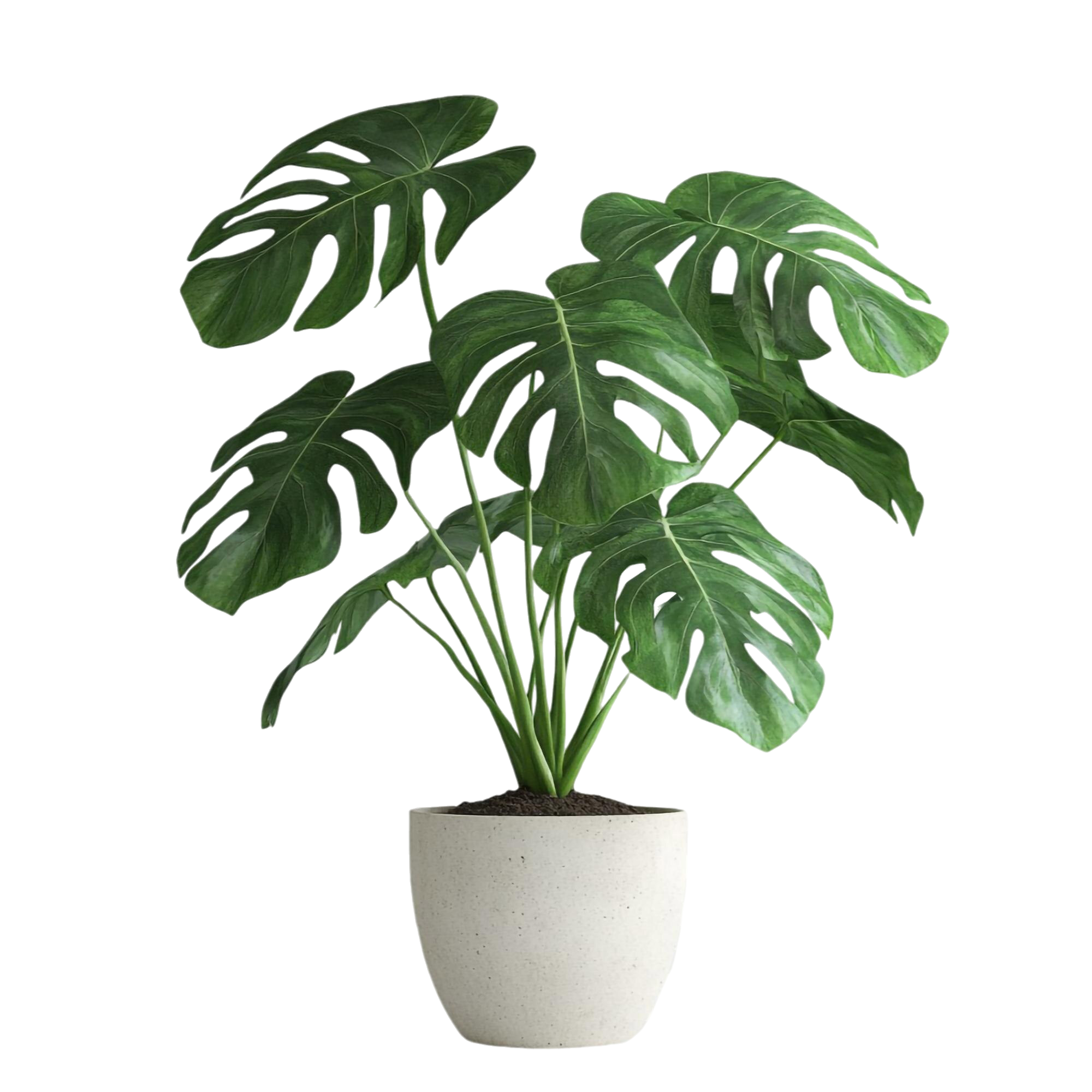
Monstera location
The right location for your Monstera determines healthy growth. In its natural environment, it grows in partial shade under the canopy of tropical forests. A bright location without direct sunlight is ideal. East and west-facing windows are especially suitable. Temperatures should remain between 18 and 25 degrees year-round. Drafts and cold locations harm the plant.
Light requirements and sunlight exposure
Direct midday sun causes sunburn and brown spots on the leaves. A distance of one to three meters from the window is optimal. For south-facing windows, a light privacy screen is recommended. Too dark locations lead to weak growth and prevent the formation of typical leaf holes.
Optimal room temperature and humidity
Monstera prefers consistent temperatures. Temperatures below 15 degrees significantly slow growth. Ideal are 20 to 25 degrees. Moderate humidity is sufficient, but higher humidity promotes larger and stronger leaves. Regular misting or a humidifier supports this.
Avoid changing location
Frequent moving causes stress. Instead, rotate the plant slightly and regularly so it grows evenly. In summer, Monstera can be placed outdoors in a protected, partially shaded spot. Direct sun and wind should be avoided.
Repotting Monstera
Monstera grows quickly and develops a strong root system. Regular repotting ensures enough space and fresh nutrients. The best time is spring.
Choosing the right substrate
Monstera requires loose, nutrient-rich, and well-draining soil. Ideal is high-quality indoor plant soil mixed with coconut fibers and perlite. Waterlogging must be strictly avoided. A drainage layer of expanded clay at the bottom of the pot is recommended.
Repotting Monstera – step by step
Lightly water the plant the day before. Carefully loosen the root ball from the pot. Remove old soil and damaged roots. Place the plant in a pot about 20 to 30 percent larger. Fill with fresh substrate and press lightly. Then water moderately.
Avoid common mistakes
Too large pots retain too much moisture and promote root rot. Use clean tools. Aerial roots should not be cut off but guided toward the soil.
Watering Monstera: How often and how much
When watering: less is more. Monstera prefers evenly slightly moist soil but does not tolerate waterlogging.
Pay attention to water quality
Use room-temperature, standing water. Very hard water can cause lime deposits but is usually unproblematic as long as watering is done correctly.
Watering technique and avoiding waterlogging
Water only when the top two to three centimeters of soil are dry. Water thoroughly and remove excess water from the saucer after about 15 minutes. Water much more sparingly in winter.
Optimize watering
In summer, a watering interval of seven to ten days is usually sufficient. In winter, ten to fourteen days suffice. Drooping leaves indicate water deficiency, yellow leaves usually indicate overwatering.

Fertilizing Monstera for strong growth
For large, healthy leaves, Monstera needs regular nutrients. Targeted fertilization is especially important during the growth phase.
The right fertilizer
Liquid green plant fertilizer is best suited. Fertilize every two weeks from March to September at half concentration. Better to fertilize regularly and mildly than rarely and strongly.
Avoid fertilization mistakes
Never fertilize dry soil. White deposits on the substrate indicate salt buildup. In this case, rinse the soil thoroughly with clear water.
Organic alternatives
Worm humus or mild organic liquid fertilizers gently supply the plant with nutrients and reduce the risk of over-fertilization.
Pruning Monstera: When and how
Pruning is possible if the plant becomes too large or has damaged leaves. Monstera tolerates pruning well.
Remove damaged leaves
Yellow or heavily damaged leaves should be removed directly at the stem base. Use clean, disinfected tools.
Proper Cutting Technique
Cut shoots above a leaf axil. The plant usually sprouts new growth there. The best time is spring.
Care After Pruning
After cutting, continue normal care. Additional fertilization is not necessary. New shoots usually appear within a few weeks.
Propagating Monstera through cuttings
The easiest way to propagate Monstera is through cuttings. Spring and summer offer the best conditions.
Cuttings step by step
Cut a shoot with at least one leaf and ideally an aerial root. Place the cutting in water. Roots will form after four to six weeks.
Care of Young Plants
Plant the rooted cutting in loose soil. Keep the substrate slightly moist. Do not fertilize during the first weeks.
Alternative: air layering
With air layering, the shoot already forms roots on the mother plant. This method is especially reliable for large plants but takes more time.
Diseases and pests in Monstera
Monstera is robust but becomes vulnerable with improper care. Waterlogging promotes fungal diseases, dry air encourages pests.
Recognizing Common Pests
Spider mites, scale insects, and thrips are the most common pests. Typical signs include webs, sticky residues, or silvery spots.
Preventive Measures
Regularly checking the undersides of leaves helps detect infestations early. New plants should initially be kept separate. Remove dust from large leaves regularly.
Treatment
Start by mechanically removing pests and rinsing. Neem oil or insecticidal soap solutions are effective and gentle. Isolate the plant until the infestation is fully controlled.

Monstera brown spots, yellow leaves, and missing leaf holes: causes and solutions
The most common problems can usually be clearly traced back to light, water, or nutrients. Observe new leaves, substrate moisture, and the location. This way, you can identify causes early and prevent further damage.
Monstera yellow leaves
Yellow leaves usually occur due to overwatering. Nutrient deficiency can also play a role, especially if older leaves turn yellow. A single yellow old leaf is often normal. Check the soil and reduce watering if it remains consistently moist.
Leaf edges and tips turn brown
Brown tips often result from dry air or irregular watering. Over-fertilization can also cause brown edges. Increase humidity and thoroughly flush the substrate if salt buildup is suspected.
No new leaf holes
Missing leaf holes are usually a sign of insufficient light or young plant age. Place the Monstera in a brighter spot, but without direct sunlight. With more indirect light, new leaves often grow larger and develop deeper splits.
Is Monstera toxic to humans and pets?
Monstera is toxic to humans and pets. All plant parts contain calcium oxalate, which can cause mucous membrane irritation. Place the plant out of reach of children, cats, and dogs. If ingested or severe symptoms occur, seek medical advice.
Safe for pets?
No. Cats and dogs often react with increased salivation, vomiting, or swallowing difficulties. Even nibbling can cause symptoms. Position the Monstera so that animals cannot reach it.
Safe for children?
Monstera is not suitable for small children if the plant is reachable. Leaves should not be put in the mouth. A higher location or a fenced-off area is advisable.
Comparison with other plants
Many arum family plants contain similar substances. Monstera is no exception. Those looking for a pet-friendly alternative should choose non-toxic houseplants.
Monstera care – summary
Monstera care is easy when location and watering are right. Place the plant in bright light without direct sun. Water only when the topsoil dries out and avoid waterlogging. Fertilize regularly during the growing season at half strength. Repot young plants every one to two years and provide larger specimens with a support. This keeps your Swiss cheese plant healthy and develops strong, decorative leaves.
Most common care mistakes
The most common mistake is too much water. Too dark locations also prevent leaf holes. Direct sun causes spots. Over-fertilization leads to brown edges. Dry air favors pests.
Buying Monstera: What to watch for
Watch for firm, healthy leaves without large spots. Check the undersides of leaves for pests. Choose strong plants with a sturdy stem. Transport the Monstera protected from cold in winter.
Rewarding plant care
With stable conditions, Monstera grows reliably and gradually develops larger leaves. A support helps its natural climbing growth. Regular checks and a calm routine are usually sufficient.

Monstera care in winter
In winter, the Monstera grows more slowly. Less light and drier heating air are the biggest challenges. Adjust watering and location slightly to avoid stress.
Respect winter dormancy
From November to February, the Monstera needs less water. Do not fertilize during this time. Keep temperatures above 15 degrees and avoid cold drafts.
Optimize light in winter
Move the plant closer to the window without exposing it to direct sunlight. In very dark locations, plant lamps can help. Rotate the plant occasionally to prevent it from growing unevenly.
Prepare for spring awakening
From February, you can slowly increase watering. Start with light fertilization as soon as new growth is visible. Check if repotting is necessary and remove old leaves.

