Why air-purifying plants are important in living spaces
In our modern living spaces, we spend a lot of time indoors, whether at home or in the office. Unfortunately, pollutants can accumulate in enclosed spaces, which can lead to health problems. One solution? Air-purifying plants!
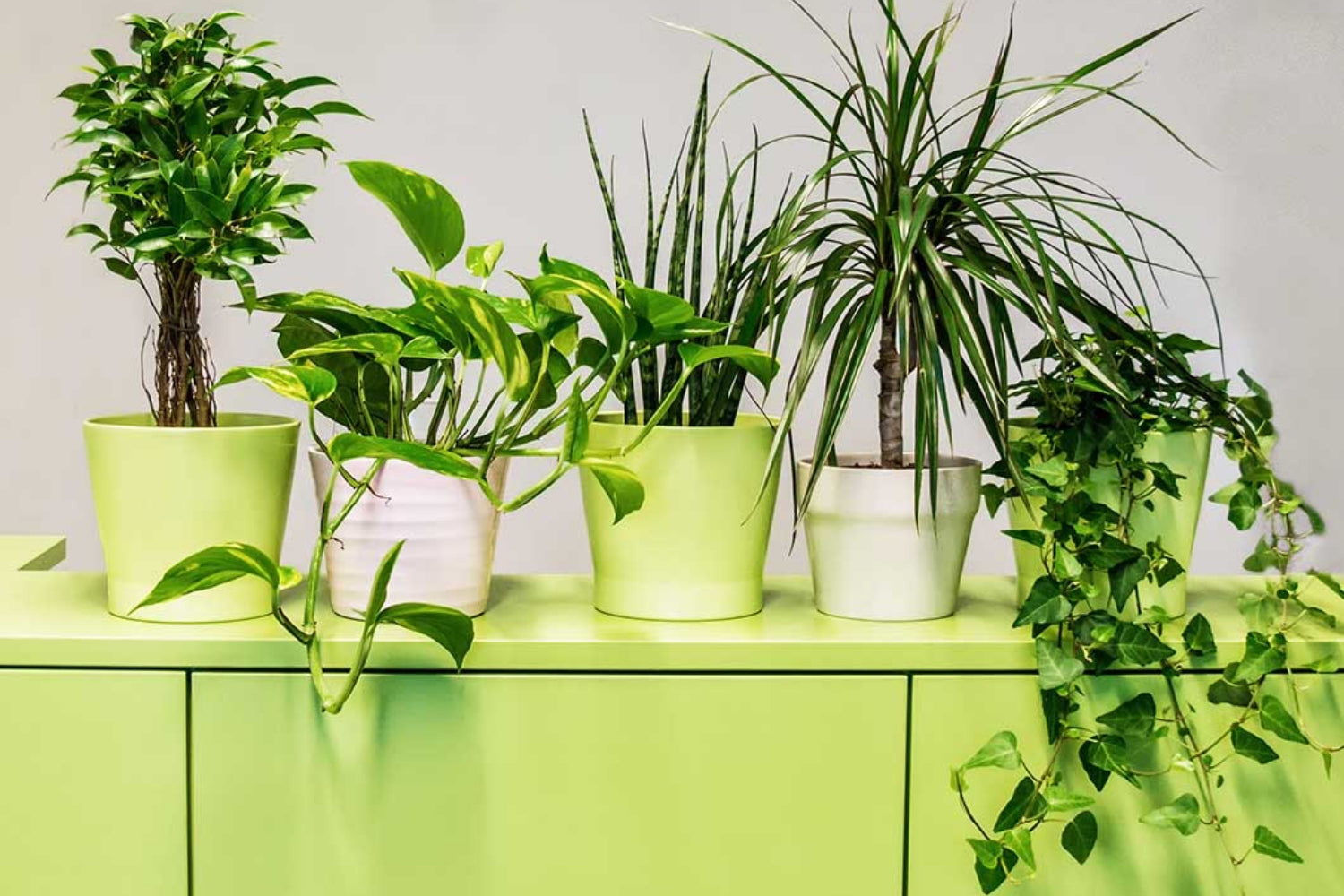
We have compiled a list of plants for you that are not only decorative but also act as efficient air purifiers. But we go one step further by maximizing the performance of these plants with the innovative AIRY biofilter.
Overview of air-purifying houseplants
Weeping fig (Ficus benjamina)
The weeping fig is known for its ability to filter formaldehyde, benzene, and other volatile organic compounds from the air. It thrives in partially shaded to sunny locations and is therefore ideal for living rooms and kitchens.
Snake plant (Sansevieria)
The snake plant is extremely low-maintenance and can filter various pollutants such as formaldehyde and benzene from the air. It prefers sunny to partially shaded locations and is therefore well suited for living areas.
Flamingo flower (Anthurium sp.)
The flamingo flower is an efficient air purifier and can remove formaldehyde, ammonia, and other pollutants from the air. It prefers sunny locations and is therefore well suited for living areas.
Spider Plant (Chlorophytum comosum)
The spider plant can remove various pollutants such as formaldehyde and carbon monoxide from the air. It thrives in sunny to partially shaded locations and is therefore perfect for living spaces.
Orchid
Orchids are not only beautiful flowers but also effective air purifiers. They can filter volatile organic compounds from the air and thus contribute to improving air quality. They prefer partially shaded locations and are therefore ideal for living rooms.

Monstera
The Monstera, also known as "Swiss cheese plant," is a large-leaved houseplant that is not only decorative but also particularly good at purifying the air. It thrives in partially shaded to sunny locations and is therefore well suited for living and kitchen areas.
Dypsis (mountain palm / golden cane palm)
The Dypsis, also known as mountain palm or golden cane palm, is an elegant houseplant that is not only aesthetically pleasing but also contributes to improving air quality. It prefers sunny to partially shaded locations and is therefore well suited for living areas.
Dragon tree (Dracaena)
The dragon tree is an attractive and air-purifying plant that is a good choice for living and kitchen areas. With its ability to filter formaldehyde, benzene, and other pollutants from the air, it helps improve indoor air quality. It thrives in partially shaded to sunny locations and is therefore ideal for living spaces.
More well-being through better indoor air
These plants are not only decorative but also highly efficient air purifiers that can help improve air quality in living and kitchen areas and enhance the well-being of the residents.