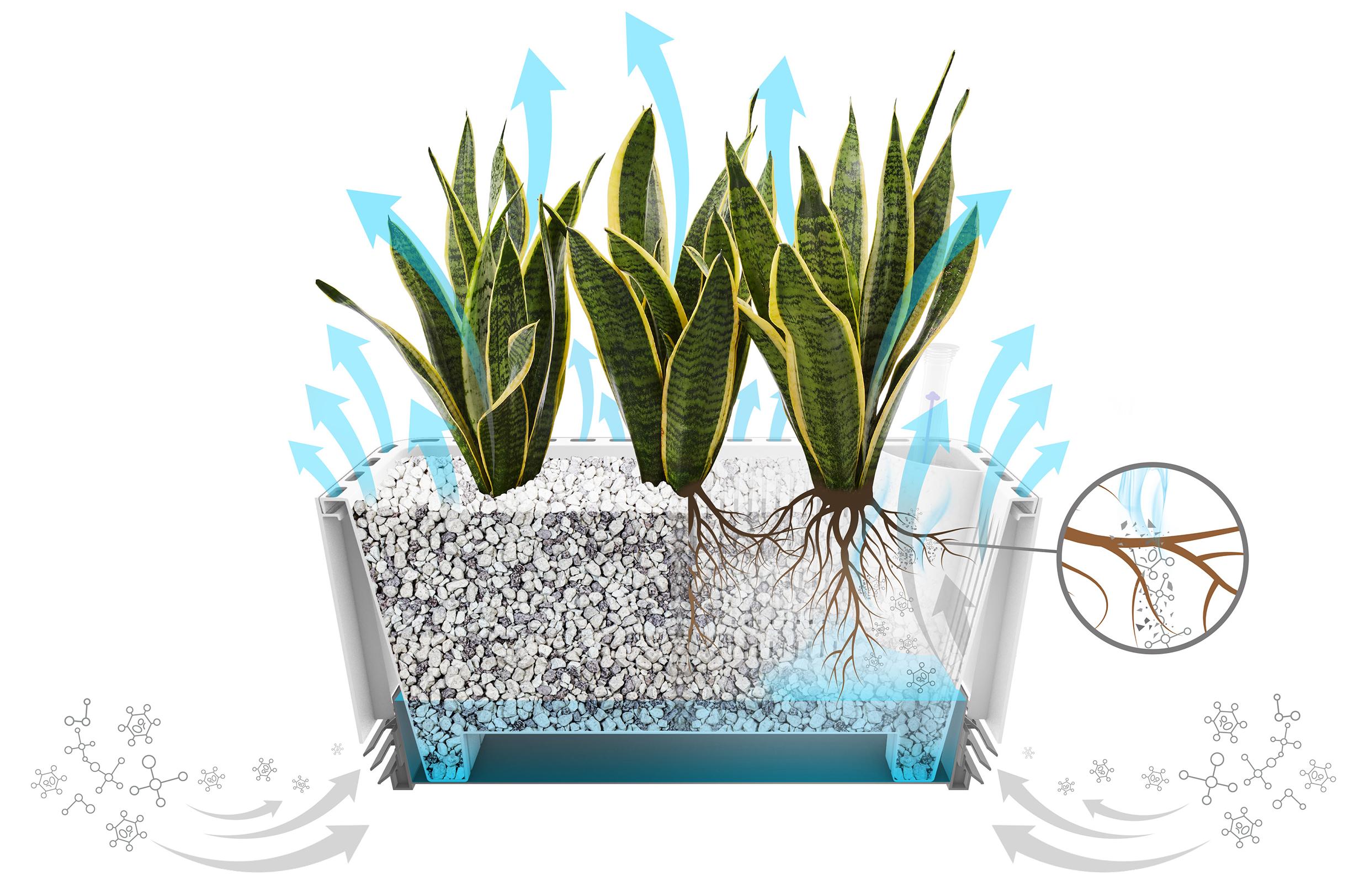

The word comes from Greek (photos = light, synthesis = composition). Photosynthesis takes place in certain plant cells: these are mainly located in the upper and green parts of a plant and contain chloroplasts. These, in turn, are organelles, small organs that also produce the green plant pigment chlorophyll (from Greek chloros = green).
Sometimes there are very few, sometimes hundreds of chloroplasts in a cell. A chloroplast is only about 5 to 6 µm (micrometers) in size. In our illustration, you can watch such a tiny one at work:


The author: Peer-Arne Böttcher
Peer is the founder of AIRY and passionate about the topic of healthy indoor air. For many years, he has been intensively engaged with the scientific foundations and technical possibilities of how our breathing air can be sustainably improved – completely without chemicals, filters, or electricity.